

Experience, Training, and the Alternatives City Hall Owes Taxpayers
By Stanley P. Parel
Part Two of a Three-Part Series: Cochran City Hall — The Cost of Leadership
There is a difference between identifying a problem and proving that another full-time employee is the only solution.
That difference matters in Cochran, where the City Council has approved two new administrative positions carrying combined salary ceilings of $160,000. Before those positions become permanent fixtures in city government, taxpayers deserve to know whether the council examined the talent and resources already on hand.
Angela Redding has reportedly acknowledged that planning and zoning is not her particular area of expertise. There is nothing inherently troubling about that admission. No city manager can be an expert in every municipal function, and acknowledging a professional limitation can be a sign of sound judgment.
But an honest acknowledgment should begin a conversation, not end one.
What experience does Redding bring in economic development, grant administration, organizational leadership, personnel management, and community partnerships? Which responsibilities could she effectively supervise with additional training? Which truly require a dedicated specialist?
Planning and zoning are technical fields. They involve land-use decisions, ordinances, public hearings, development review, and sometimes complicated legal requirements. Nobody should pretend that a weekend workshop makes someone a certified planning professional. Yet oversight and specialized execution are not necessarily the same job.
Could targeted professional development strengthen the city manager’s ability to oversee planning functions? Could regional planning agencies, outside specialists, or intergovernmental agreements provide technical assistance when needed? Could a qualified existing employee be trained to coordinate portions of the work?
The same questions apply to human resources. Employee relations, compliance, benefits, hiring, and personnel policies require careful attention and confidentiality. But did the council assess which duties are already performed by current staff, which require specialized expertise, and whether a combined administrative role could handle some of them?
None of those alternatives should be assumed cheaper or better without evidence. Consultants cost money. Training takes time. Overloading employees can create mistakes and burnout. That is precisely why a genuine comparison matters.
Put the options on paper. Compare costs, qualifications, legal risks, workloads, and expected service improvements. Then tell residents why the selected structure offers the best value.
This is not about questioning Redding’s worth or expecting one person to run every department. It is about asking whether the council has made the most of existing leadership before expanding the management payroll.
The council may have done this work already. If so, show it. Publish the job descriptions, organizational chart, and rationale for separating the responsibilities. Transparency would help residents understand the decision even if they disagree with it.
Cochran does not need to choose between competent government and careful spending. It should insist on both.
Before City Hall adds another office, it ought to answer one question: did we fully examine the people and possibilities already inside the building?
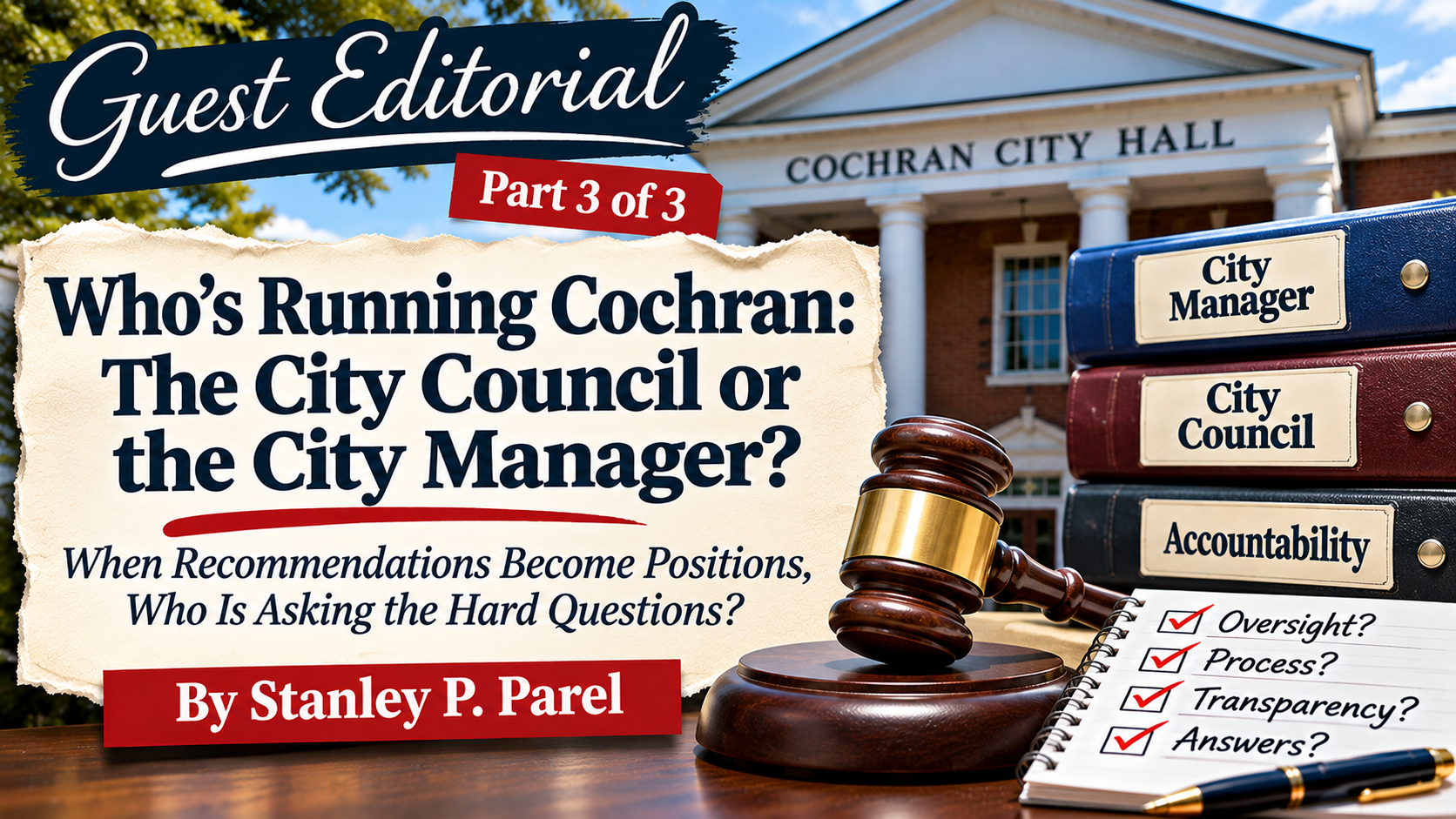
Next in Part Three: Who’s Running Cochran: The City Council or the City Manager?
Editor’s Note: This column is an opinion piece submitted by Stanley P. Parel. The views and opinions expressed are those of the author and do not necessarily reflect those of The Ledger, its publisher or its contributors. The Ledger welcomes thoughtful, respectful discussion of matters affecting our community.




Leave a Reply