
By Becky Holland
There are two sides to every story.
And then there are the facts.
In today’s world, it’s easier than ever to make an accusation. Social media allows opinions to spread in seconds, assumptions to become “truth,” and rumors to travel farther than the facts ever seem to catch up.
That’s why words matter.
And definitions matter.
One word that gets thrown around far too casually is plagiarism.
Plagiarism is not writing about the same topic as someone else. It is not reaching a similar conclusion. It is not expressing an opinion that someone else has also expressed.
Plagiarism is taking another person’s words, ideas expressed in a unique way, or creative work and presenting them as your own without giving proper credit.
There is a difference.
Every newspaper in America reports on elections. Every television station covers major storms. Pastors across the country preach from the same passages of Scripture every Sunday. Columnists often write about the same issues because they live in the same world and respond to the same events.
Sometimes two people simply arrive at similar ideas.
That isn’t plagiarism.
Recently, I had occasion to put these principles into practice. A concern was brought to my attention involving one of The Ledger’s contributors. Because the integrity of our writers and our publication matters, I took the concern seriously.
Rather than reacting emotionally or making assumptions, I did what journalists are supposed to do.
I investigated.
I reviewed the available documentation, verified the timeline, and examined the facts before reaching a conclusion.
The documentation answered the questions. Coincidence became the word of the day not plagiarism.
It reminded me of something that should never go out of style: facts matter more than assumptions.
As publisher of The Ledger, I have a responsibility to our readers, our contributors, and our community. That responsibility isn’t to defend people automatically, nor is it to condemn them quickly.
It is to seek the truth.
Sometimes that means asking uncomfortable questions. Sometimes it means admitting mistakes when they happen. And sometimes it means discovering that an accusation simply isn’t supported by the evidence.
The standard should never change based on who is involved.
Investigate first.
Verify the facts.
Then speak.
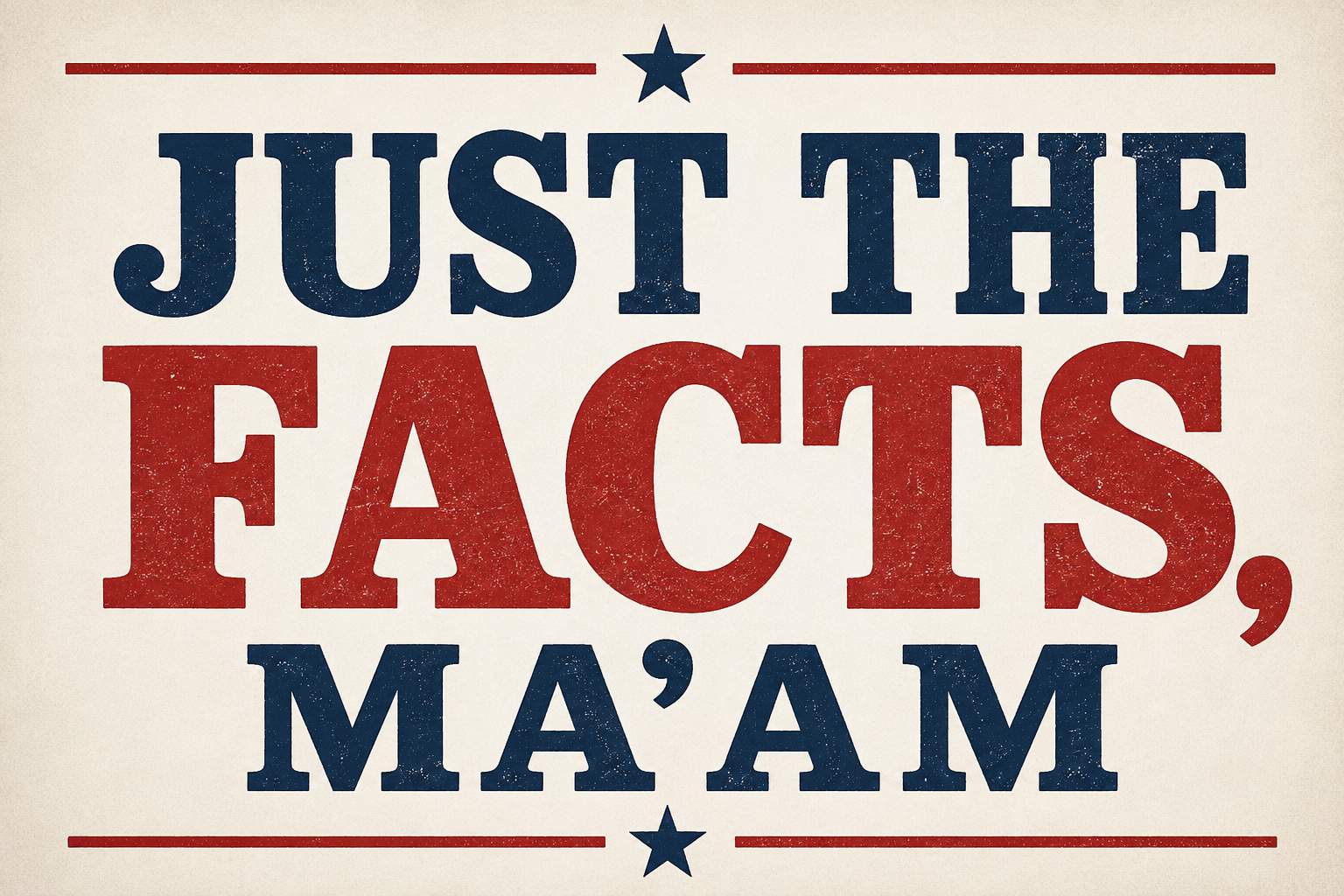
One of television’s most memorable lines came from Dragnet: “Just the facts, ma’am.”
It’s a simple phrase, but it carries an important lesson.
Whether you’re a journalist, a public official, a business owner, or someone scrolling through Facebook, the principle is the same.
Before sharing a rumor…
Before repeating an accusation…
Before deciding someone else’s motives…
Look at the facts.
Because facts don’t care about assumptions.
Facts don’t depend on emotions.
Facts don’t spread nearly as fast as rumors—but in the end, they’re still the foundation of the truth.
And truth is something worth protecting.





Leave a Reply