
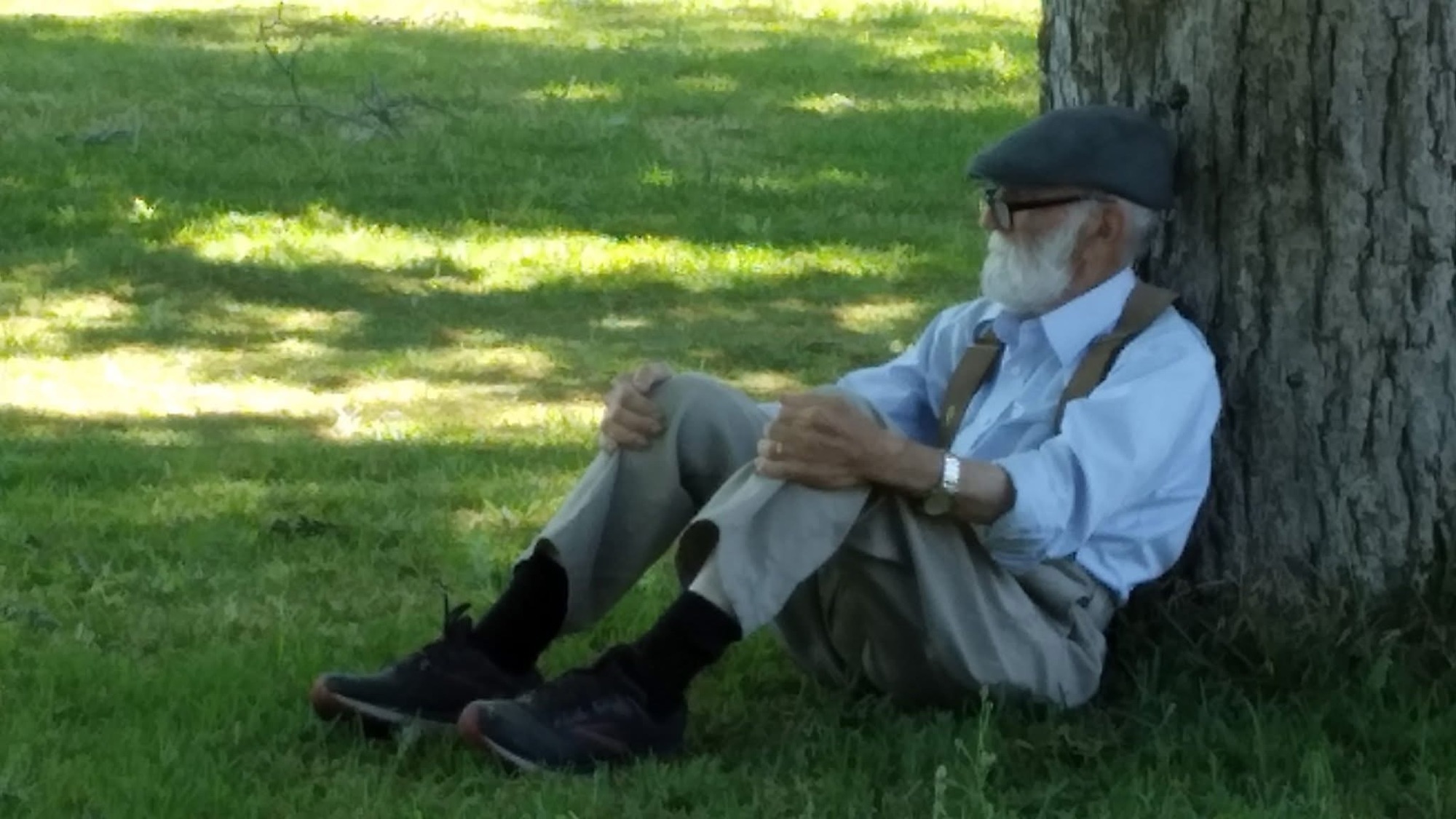
By James C. Holland
Editor’s Note: Before his passing in 2023, James C. Holland was a thoughtful writer and storyteller. If he were still here—and well—he would no doubt still be writing today.
We are honored to share this piece exactly as he wrote it, with little to no edits, so his voice can be heard just as it was intended.
— Becky Holland
Forty five years ago, my wife and I left our home in Dodge County, Georgia to seek our fortune at a college in Marshall, Texas.
We had built a little house on an acre of land that I had purchased as a teenager, and we had planned to make our life in that place. We had been married for less than two years, when we decided that I needed to go to college.
A family friend was vice president of a small Baptist school in the piney woods of east Texas, and he had invited us to do our college work there. We were just on the upper side of twenty years, we were young and gutsy.
We sold our house and purchased a mobile home, we called them house trailers back then, and pulled it eight hundred miles to a town that we knew very little about.
We arrived in town with what we thought was enough money to get our “trailer” set up and ready for our new adventure.
We felt sure that we could spend what we had, fully knowing that shortly my severance check from the job that I had left would come.
When the check did not come, and when we had spent most of our monies, I began looking for some kind of work.
We learned to eat pinto beans and day old bread to keep the cost of groceries down.
One could buy a large bag of dried beans for not much, and we could eat from them for several days. All Texans ate a lot of beans, and we had learned to prepare them more than one way. There was a bakery in town.
We reasoned that most bread that we bought in a store was a day old before we got it anyway, so we bought our bread at the surplus store.
The costs of getting the “trailer” set up was much more than we had planned, and our money ran out.
Here we were, two inexperienced young people in a town with no family, there wasn’t a relative in the whole state.
This was a college town, and there were more people than there were jobs. We were not hungry, we still had beans and day old bread. We had a roof over our heads, but since the check had not come, I had to look for work.
I knew that there wasn’t much gasoline in the car, but I felt that there was enough to go across town to apply for a job that I had heard about.
I had placed a rifle, that I had bought before we got married, in the car a few days earlier, thinking that, when I could get the courage, I would sell it or pawn it. I never got the courage, so the rifle was still in the car.
On the way back to our “trailer” the car ran out of gas. I began to get anxious. The car had stopped on a narrow bridge over some railroad tracks.
When I had determined that it was indeed out of fuel, I picked up the rifle and walked to a nearby service station to see if I could trade it for one gallon of gasoline, gas was selling in Texas then for twenty cents a gallon. I only wanted enough to get the car home.
I recognized the station owner as a member of a church we attended. I told him of my dilemma. He wasn’t very polite. He said that he didn’t need a rifle, and that he wasn’t into credit or charity, I had not asked for either.
I started back toward the car, feeling low, I did not know how I was to get it off the narrow bridge.
I heard someone call from behind. I looked and saw a man walking toward me with a container that had enough gas to get the car started.
When we had it running, I drove him back to the station and he asked me to pull up to the gas pump, where he pumped ten gallons into my empty tank, pulled two dollars from his own pocket and paid the owner of the station.
I offered him the same rifle that his boss would not trade for one gallon of fuel, but he would not take it. He said, “I have been in trouble too.”
A few days later our check arrived and I drove to the station to pay him the two dollars. He would not take it until I insisted.
Marshall was a real college town. There was a black Methodist college, a black Baptist college and the all white college that I was to attend.
There were no outward racial troubles, but there wasn’t much racial togetherness either. The “blacks” lived on one side of town and the “whites” lived on the other.
I already knew that the tensions between the races, that I had seen growing up, were not right, and I had made my mind up to rid prejudice from my being. That experience, when my car ran out of gas and a young black service station attendant came to a white Georgia boy’s aid, helped me to know that all people are capable of exercising the kind of compassion that our loving God intended.




Leave a Reply