
By Becky Holland
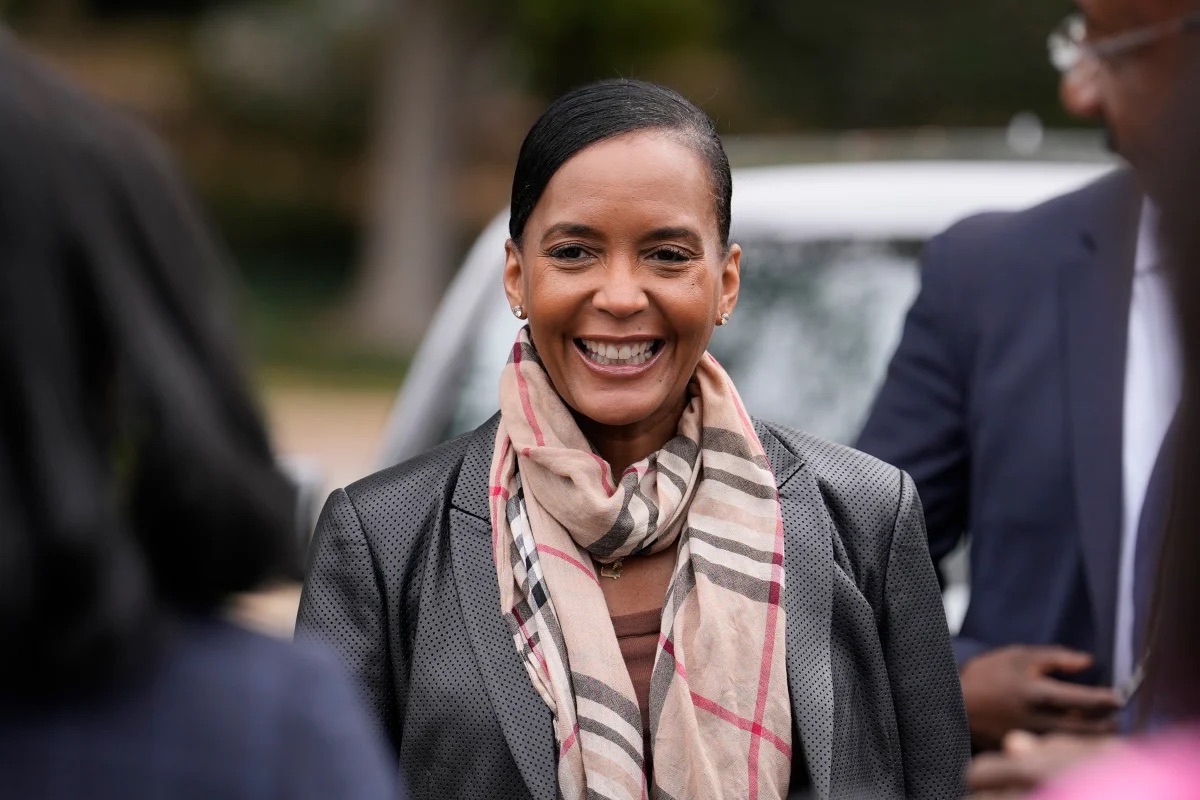
Georgia voters made history Tuesday night, Nov. 3, electing Democrat Keisha Lance Bottoms as the first Black woman governor in the state’s history — and the first Black woman elected governor anywhere in the United States.
The victory also marks a significant political shift in Georgia, ending 24 years of Republican control of the governor’s office and returning a Democrat to the state’s highest executive position for the first time since 2002.
Bottoms, 56, defeated Republican Rick Jackson, a healthcare executive who entered the race with endorsements from President Donald Trump and outgoing Gov. Brian Kemp.
The Associated Press called the race at 9:24 p.m.
According to unofficial results from the Georgia Secretary of State’s Office at approximately 10:20 p.m., Bottoms received 2,025,429 votes, or 54.25 percent, while Jackson received 1,708,307 votes, or 45.75 percent. Results were reported from 156 of Georgia’s 159 counties.
But beyond the numbers, Tuesday’s election represents another chapter in Georgia’s changing political landscape.
Once considered reliably Republican in statewide elections, Georgia has become increasingly competitive, with growing metropolitan populations and longstanding rural voting traditions shaping election outcomes.
For Bottoms, the victory follows a political career that includes serving on the Atlanta City Council, working as an attorney and magistrate judge, and leading Atlanta as mayor from 2018 to 2022.
Her administration faced significant challenges, including the COVID-19 pandemic, racial justice demonstrations and concerns about violent crime. Those issues became points of criticism during the governor’s race.
Jackson emphasized his business background and Republican priorities, presenting himself as an alternative to Bottoms’ approach to government.
Throughout her campaign, Bottoms focused on healthcare affordability, education and economic pressures facing Georgia families. Her proposals included expanding Medicaid, providing state income tax relief for public school teachers and allowing local governments to eliminate sales taxes on groceries.
Turning those campaign promises into policy will require working with state lawmakers, potentially including Republican legislative majorities.
The statewide outcome also contrasts with voting in Bleckley County, where residents favored Jackson and other Republican candidates in Tuesday’s general election.
That contrast underscores an important reality about Georgia: Its voters do not speak with one political voice, and the challenges facing metropolitan communities and rural counties are not always identical.
Bottoms will succeed Kemp, who could not seek another consecutive term under Georgia law.
Election results remain unofficial until certified by state election officials.
Sources: Georgia Secretary of State’s Office (unofficial November 3, 2026, election results); The Associated Press (election projections and historical significance); Georgia Public Broadcasting (candidate backgrounds and campaign coverage); NPR (campaign proposals and policy positions); and The New York Times (election-night reporting).




Leave a Reply